28 июля
SURVIVAL RITUALS and the Art of Permanent Crisis
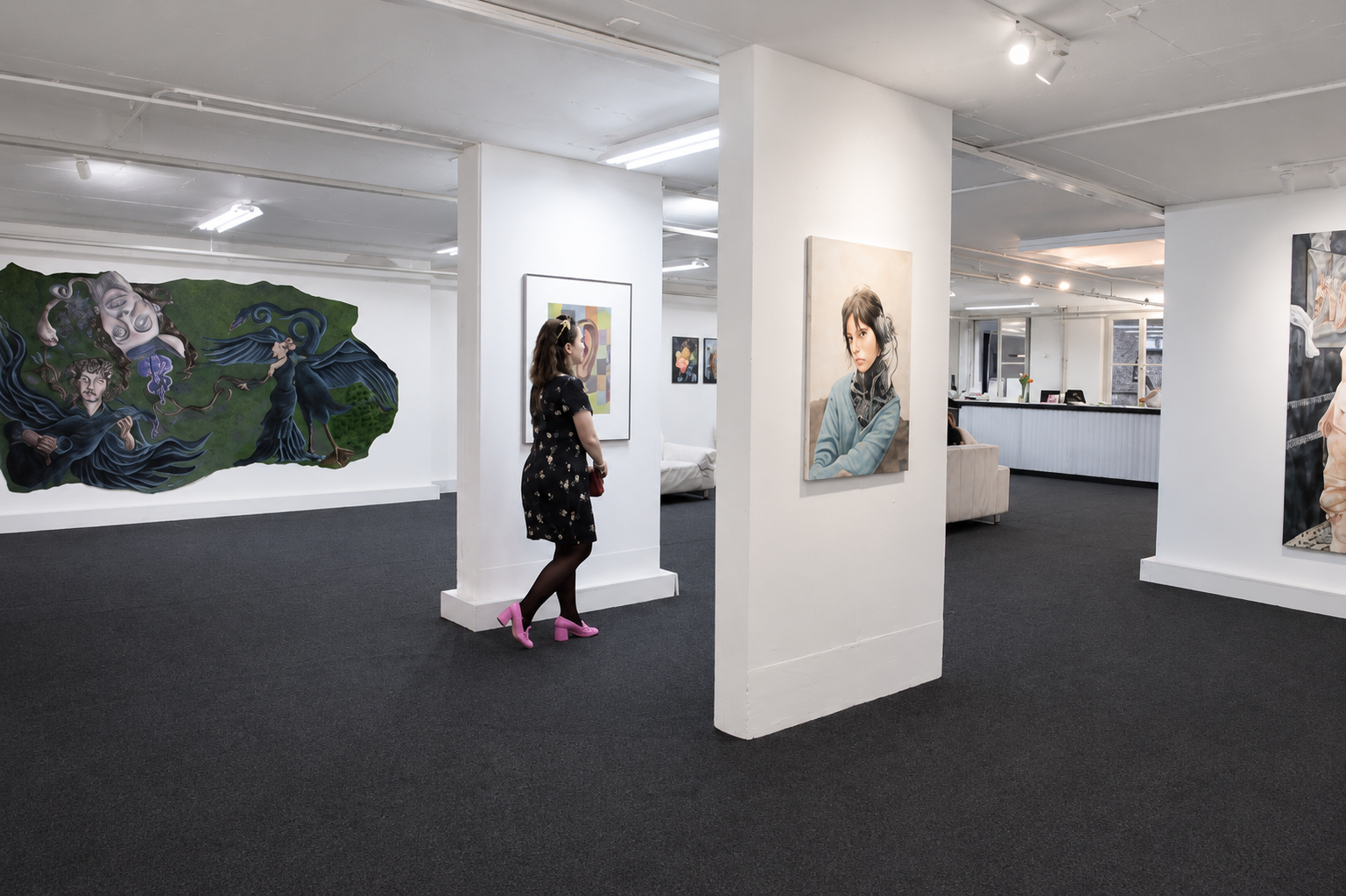
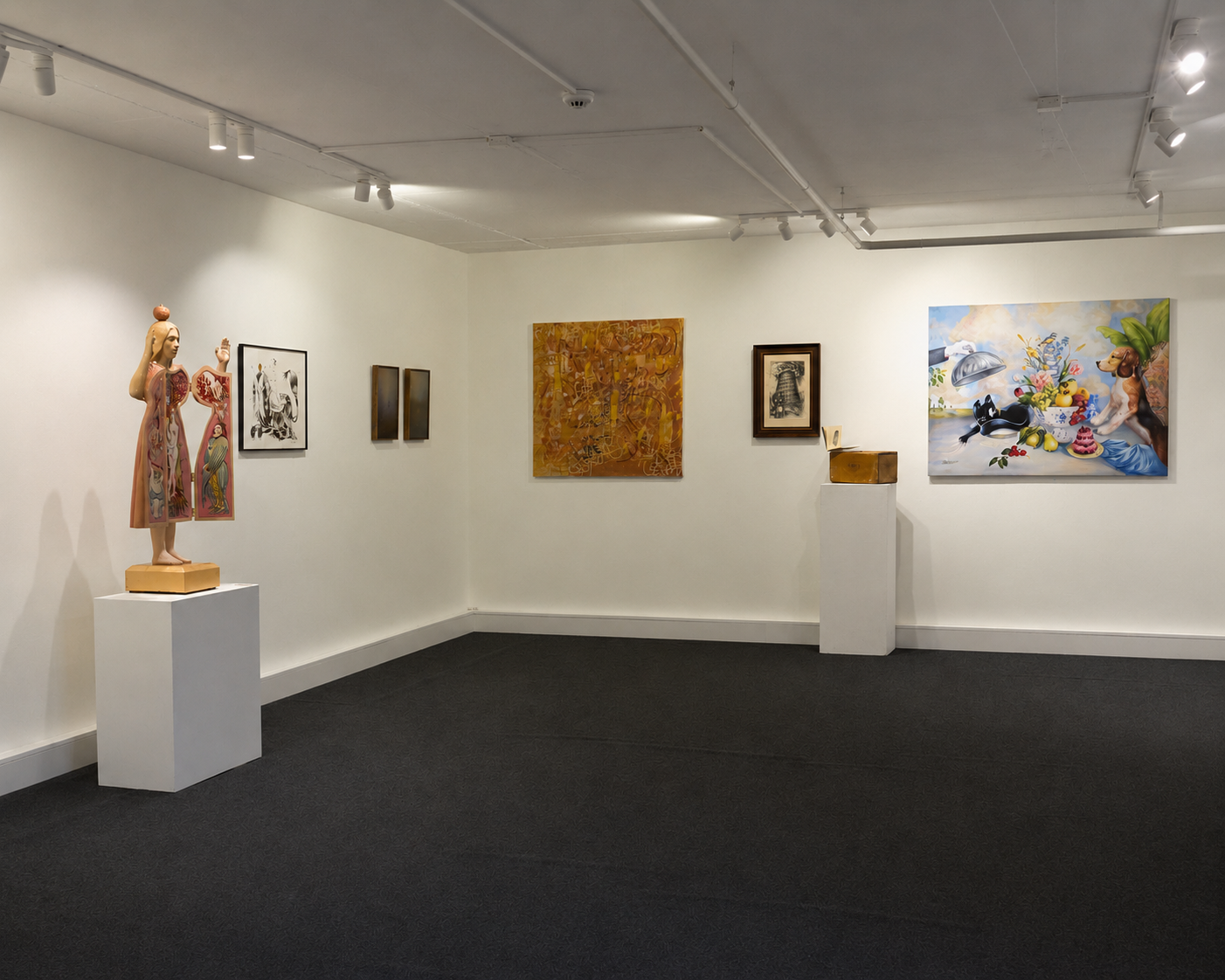
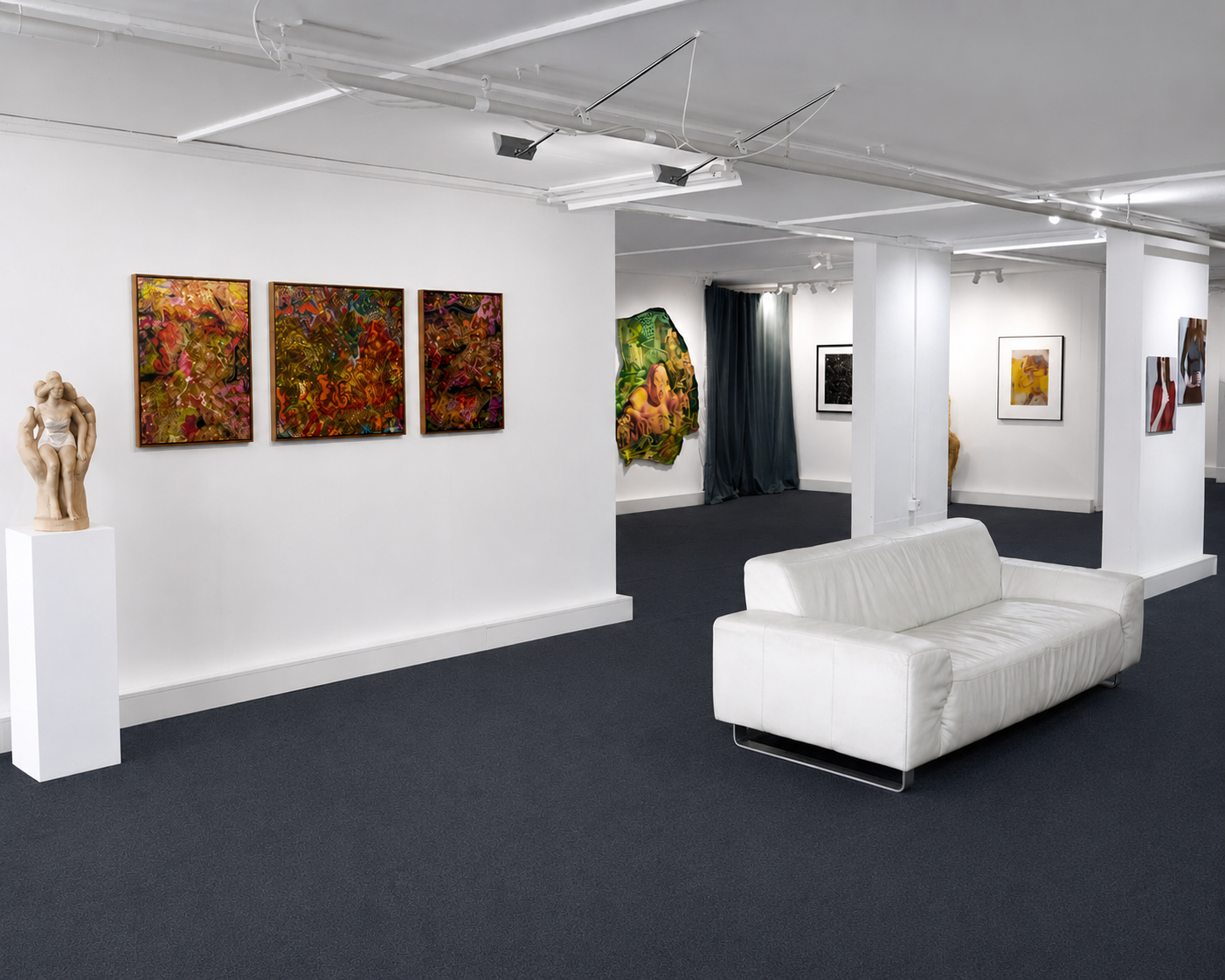
SURVIVAL RITUALS, staged at Basel Art Center from 15 to 21 June 2026 and organised jointly by the centre, TUASHO Art Strategy & Development from Switzerland and the New York-based Rukh Art Hub, resisted this pattern by questioning a premise that many exhibitions quietly accept: that crisis is a subject to be represented from a safe distance.
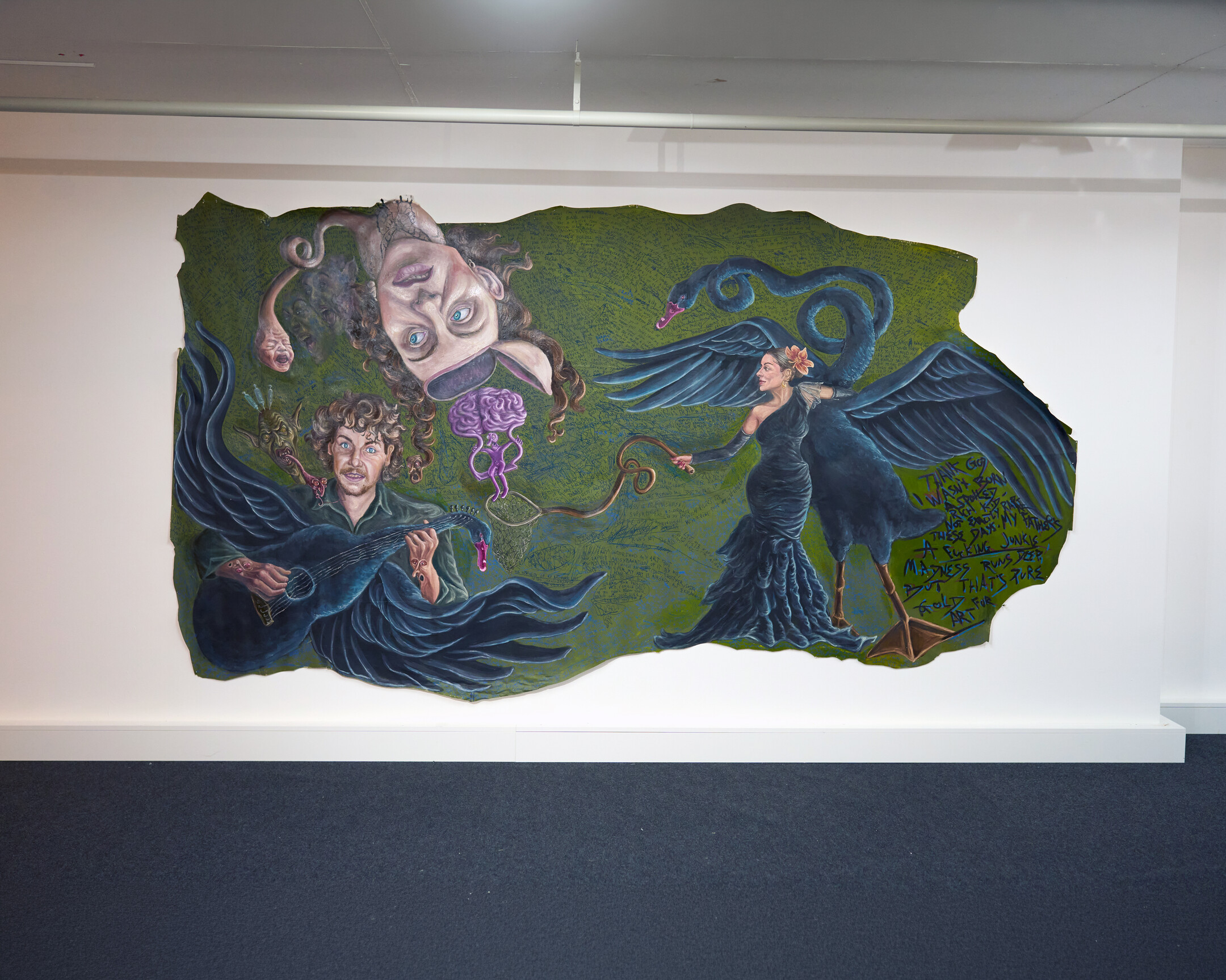
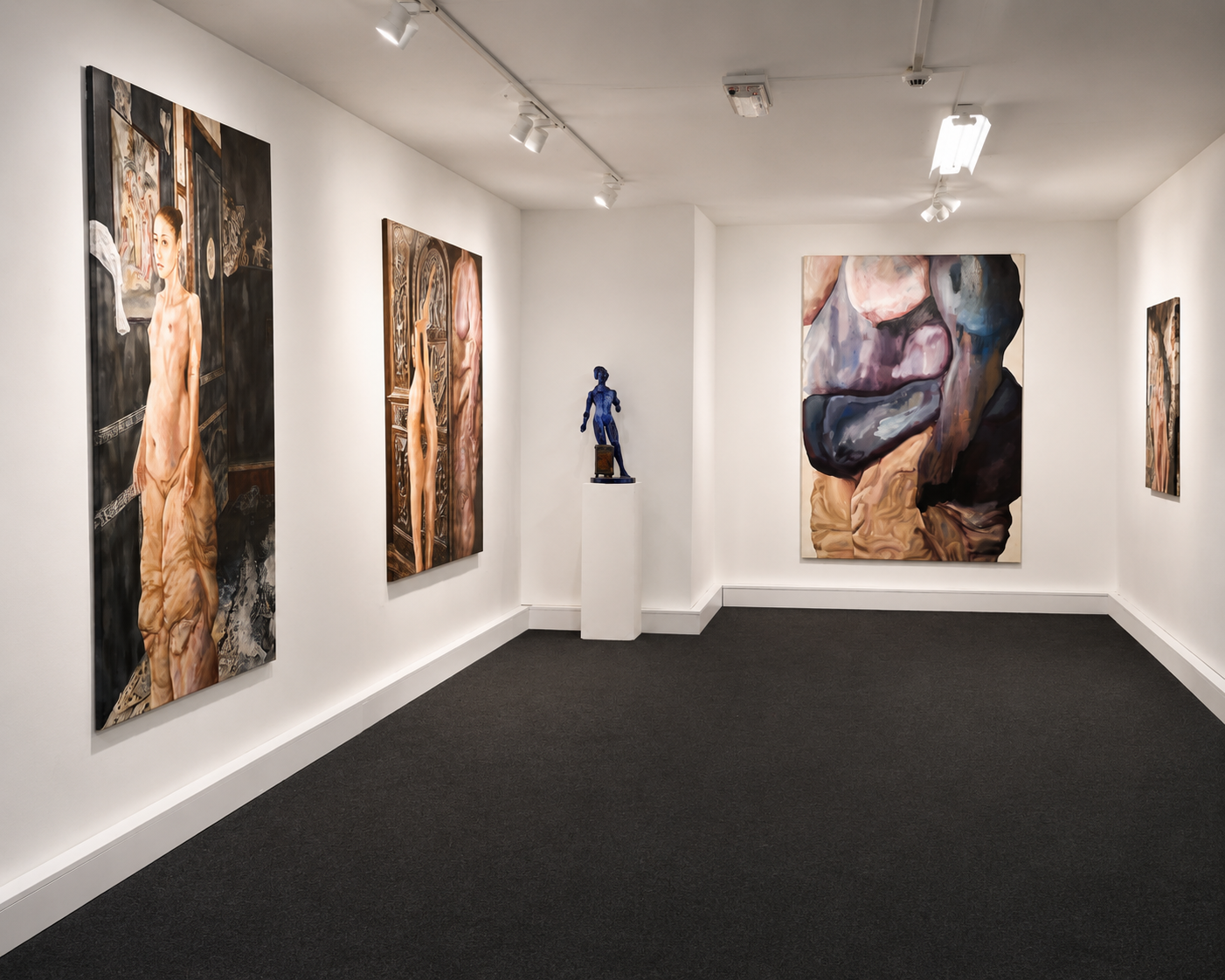
Noah Di Bettschen, Pure Gold, oil on canvas, 200x370 cm, 2025
The participating artists, coming from the United States, the Netherlands, Switzerland, Germany, Luxembourg and Ukraine, were not asked simply to illustrate war, displacement, ecological collapse or technological anxiety. Their projects explored how people, bodies, organisms and systems continue to function inside conditions that no longer appear temporary.
That distinction, between depicting a crisis and developing practices for living within it, is where the exhibition gained its critical weight.
Among the artists presented were Kate Barvinska, Illia Bel, Anna Biletska, Bryan Hamilton Chadwick, Noah Di Bettschen, Xavier Escala, Gautier Hardy, Artem Humilevsky, Iren Ivanova, Alyona Koni, Sergey Melnitchenko, Olena Morozova, Nina Murashkina, Yuriy Musatov, Olga Ottenheijm Selyshcheva, Tetiana Popyk, Alexej Sachov, Savka, Michael Schuetz, Iryna Semko, Jasper Smit, Sulamith Tamborriello, Shaul Tzemach, Lesya Teslya, Myriam de Wurstemberger, Pavol Zelina, Tetiana Malinovska, Artem Volokitin and Waone.
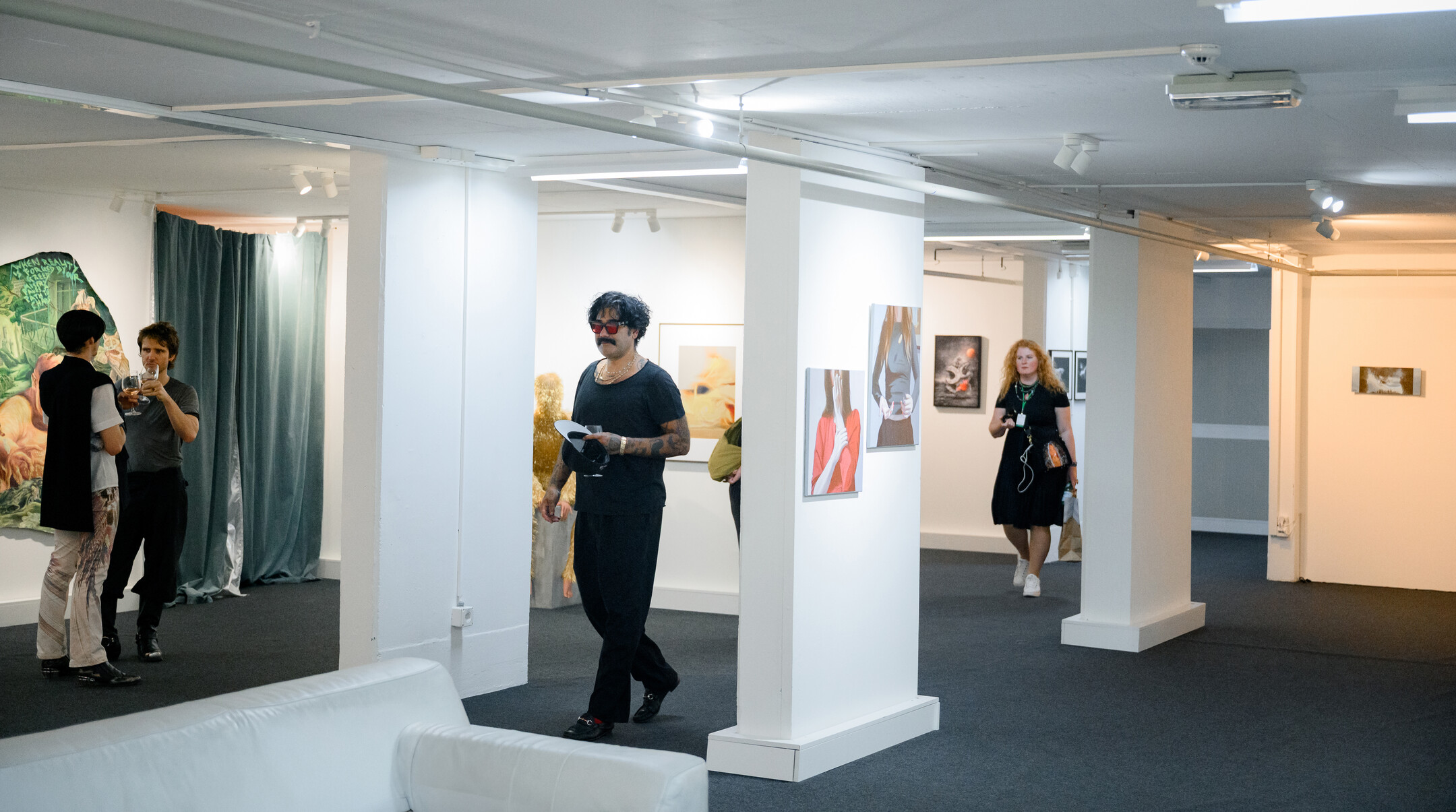
Opening day
Turner, borrowed and bent
Co-curator Anna Avetova built the exhibition around Victor Turner’s concept of liminality, the anthropological description of a person suspended between social states, no longer what they were and not yet what they will become.
Turner developed the idea in relation to ritual passage. A person leaves one recognised condition, enters a threshold period in which familiar status and structures temporarily disappear, and eventually returns to society in a transformed role. The framework assumes that the passage will end. There is always an exit.
SURVIVAL RITUALS removed this assumption.
“We are no longer passing through a crisis; we are learning to live inside one,” Avetova stated in the exhibition’s framing text. “The door back has closed, and the door forward has not opened.”
This was more than a curatorial phrase. If Turner’s threshold always led somewhere, an exhibition that removes the destination is not simply applying anthropological theory to contemporary art. It is asking whether the idea of ritual passage still holds when uncertainty becomes permanent.
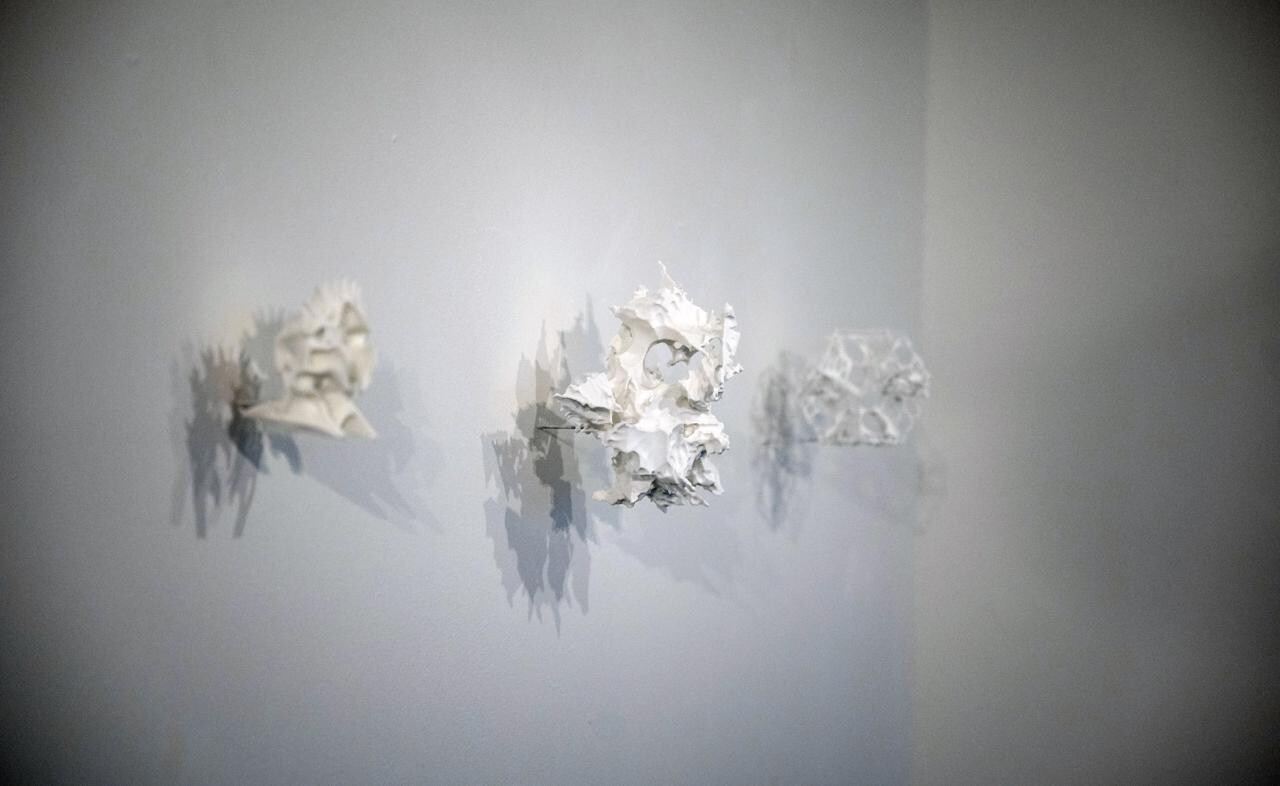
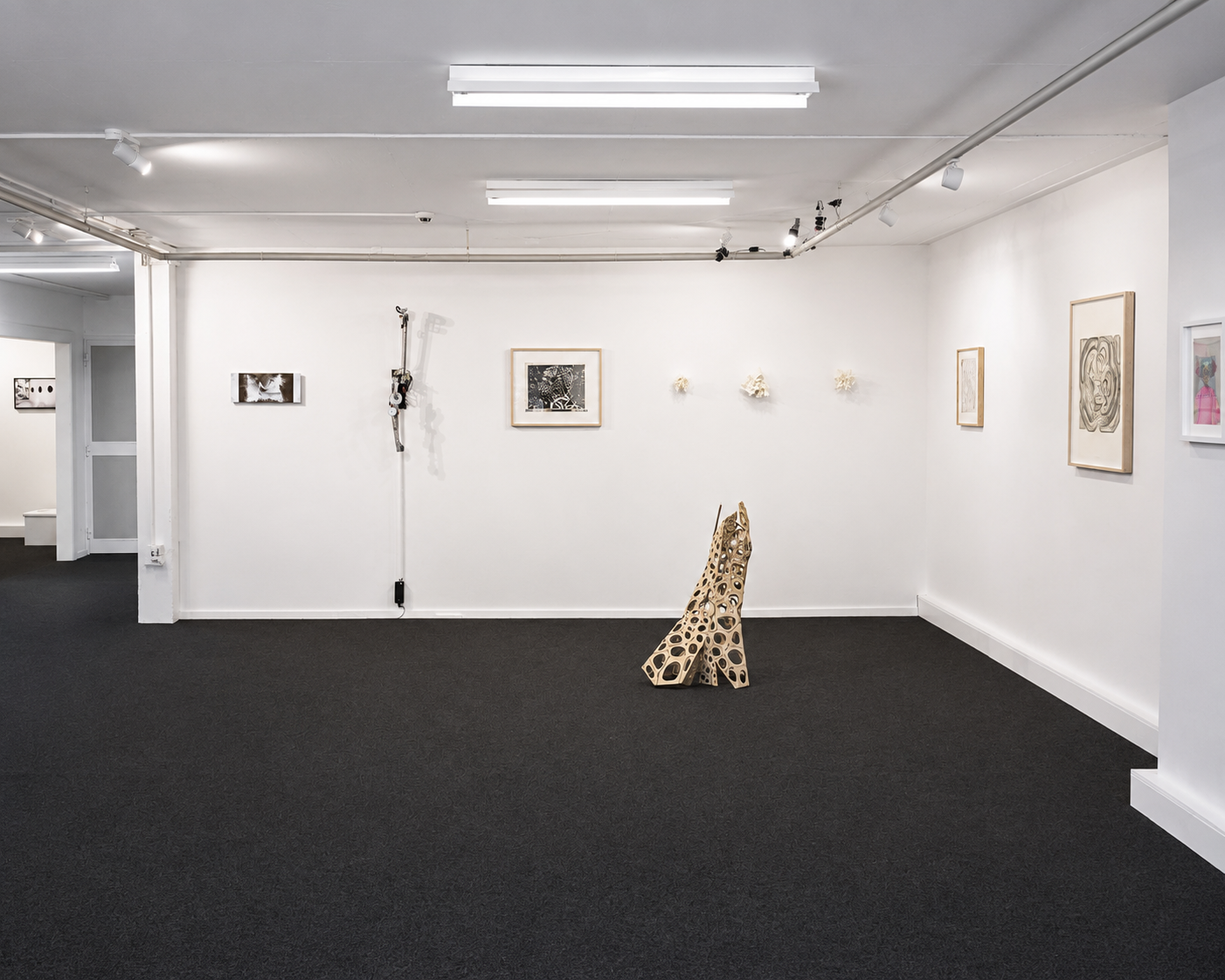
Shaul Tzemach, 3D Sculpture, 2026
The question is particularly relevant now. War, forced migration, ecological disruption and technological transformation no longer unfold as separate events with clear beginnings and endings. They overlap, accumulate and become part of everyday life. Under such conditions, survival is rarely a single dramatic act. More often, it consists of repetition, attention, adaptation and care.
The risk of this curatorial approach is aestheticisation. Once instability is framed as a ritual, there is a danger that lived precarity becomes a formal device, made comfortable for the viewer because it has been given a clear structure. The most convincing works in SURVIVAL RITUALS resisted this comfort. They did not resolve crisis into a clean metaphor. They preserved its contradictions.
Practices that refuse easy resolution
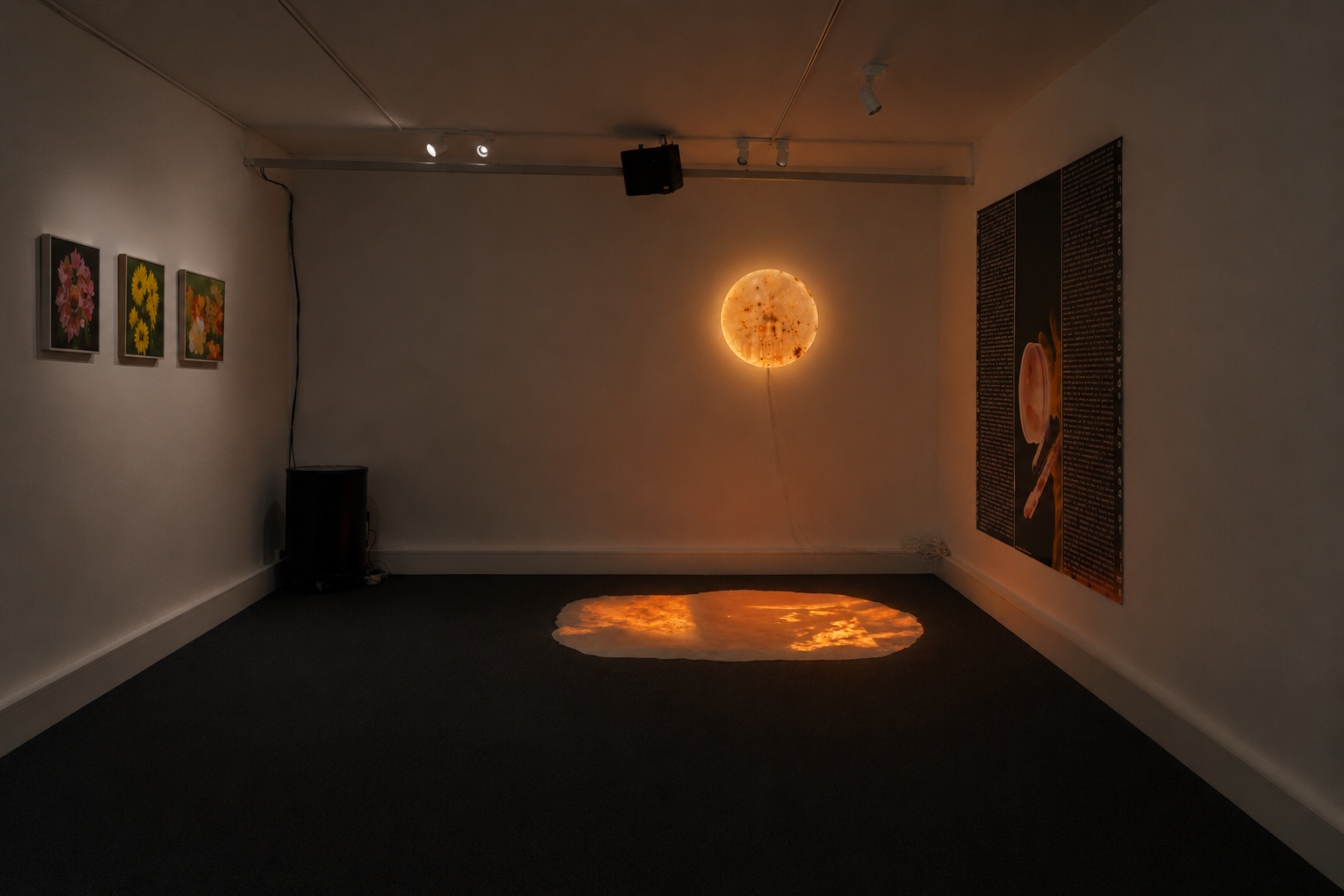
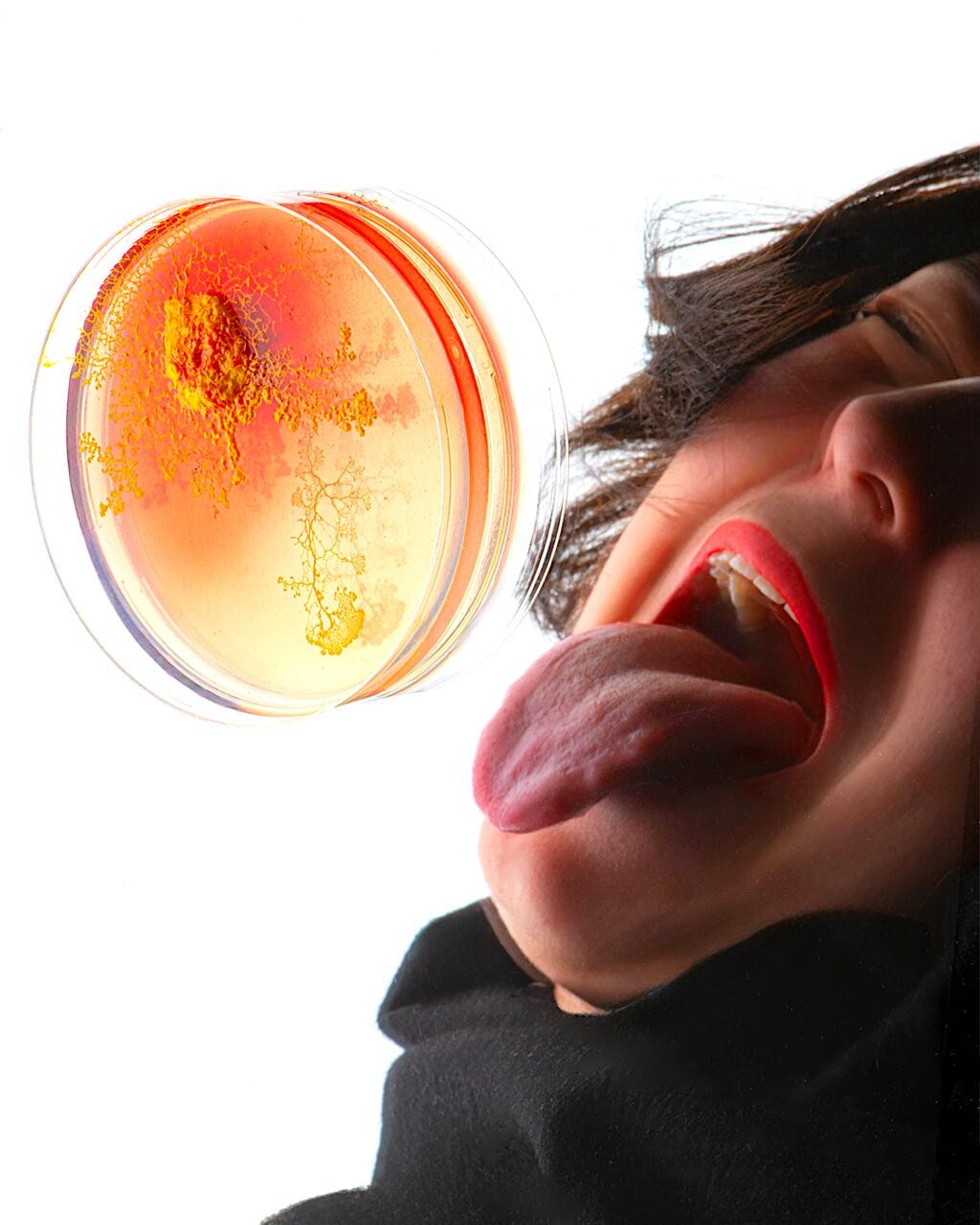
Sulamith Tamborriello’s a chimeral duet towards the end of time, developed over a year in collaboration with a slime mould, offered one of the exhibition’s clearest examples of survival as an ongoing relationship. Authorship in the work was distributed between a human artist and a non-human organism through recurring acts of feeding, observing, sampling, photographing and writing. The organism was not used merely as material. Its movement and behaviour actively influenced the development of the project. Survival here was neither heroic nor individual. It depended on maintenance, responsibility and coexistence. The work’s refusal to place the human being at the centre was exactly what prevented it from becoming a simple ecological illustration.
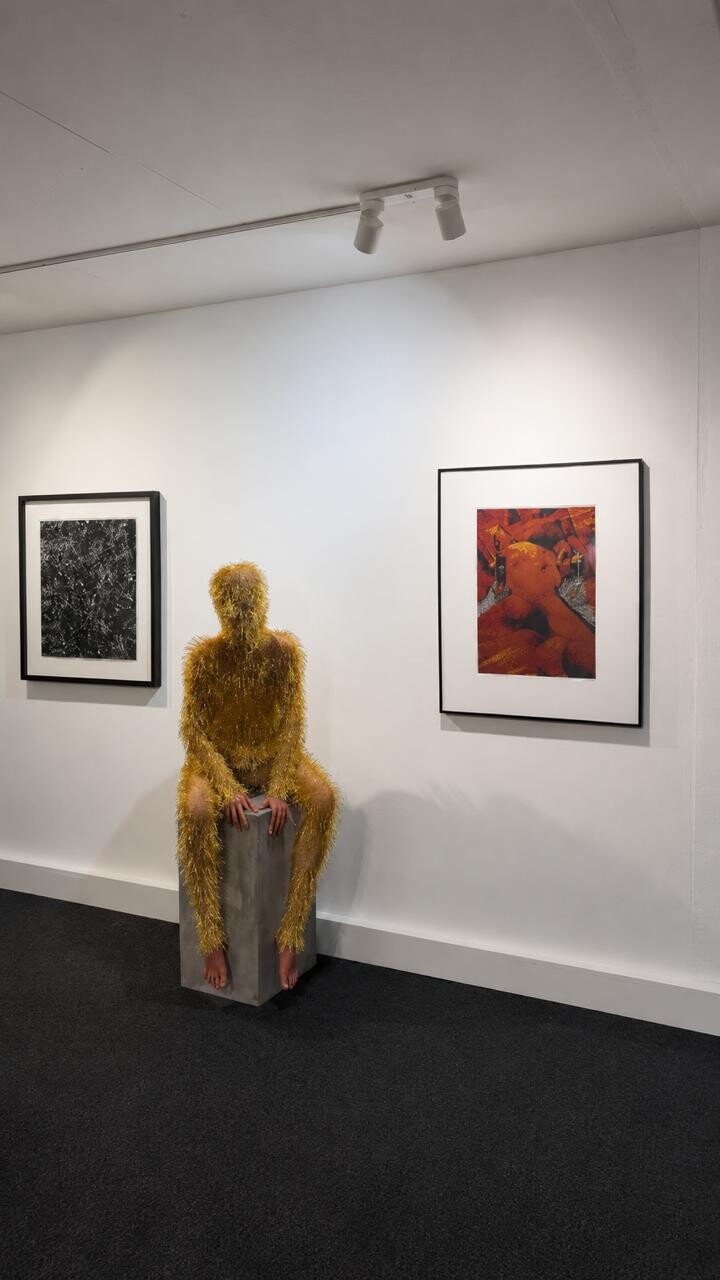
Myriam de Wurstemberger’s Safe Space, a full-body suit assembled from approximately 24,000 brass needles, approached vulnerability from another direction. The object appeared protective and dangerous at the same time. It covered the body, but it also made intimacy impossible. Anyone attempting to touch the protected figure would be injured. The work asked a difficult question: when does safety become isolation? Its beauty was essential to this tension. The brass surface was luminous and seductive, even as the needles transformed protection into a threat. The object did not provide an answer. It held defence and vulnerability inside the same form.
Bryan Hamilton Chadwick’s 365 Skies operated through duration. The artist painted the sky every day for an entire year and later brought the paintings together with sound recordings and personal narration in a single film. The sky is one of the most familiar images available to us, but Chadwick’s discipline changed the act of looking at it. Repetition revealed difference. Weather, light, mood and perception shifted from one day to the next. In an image culture designed around speed and immediate replacement, returning to the same subject for a year became a quiet act of resistance.
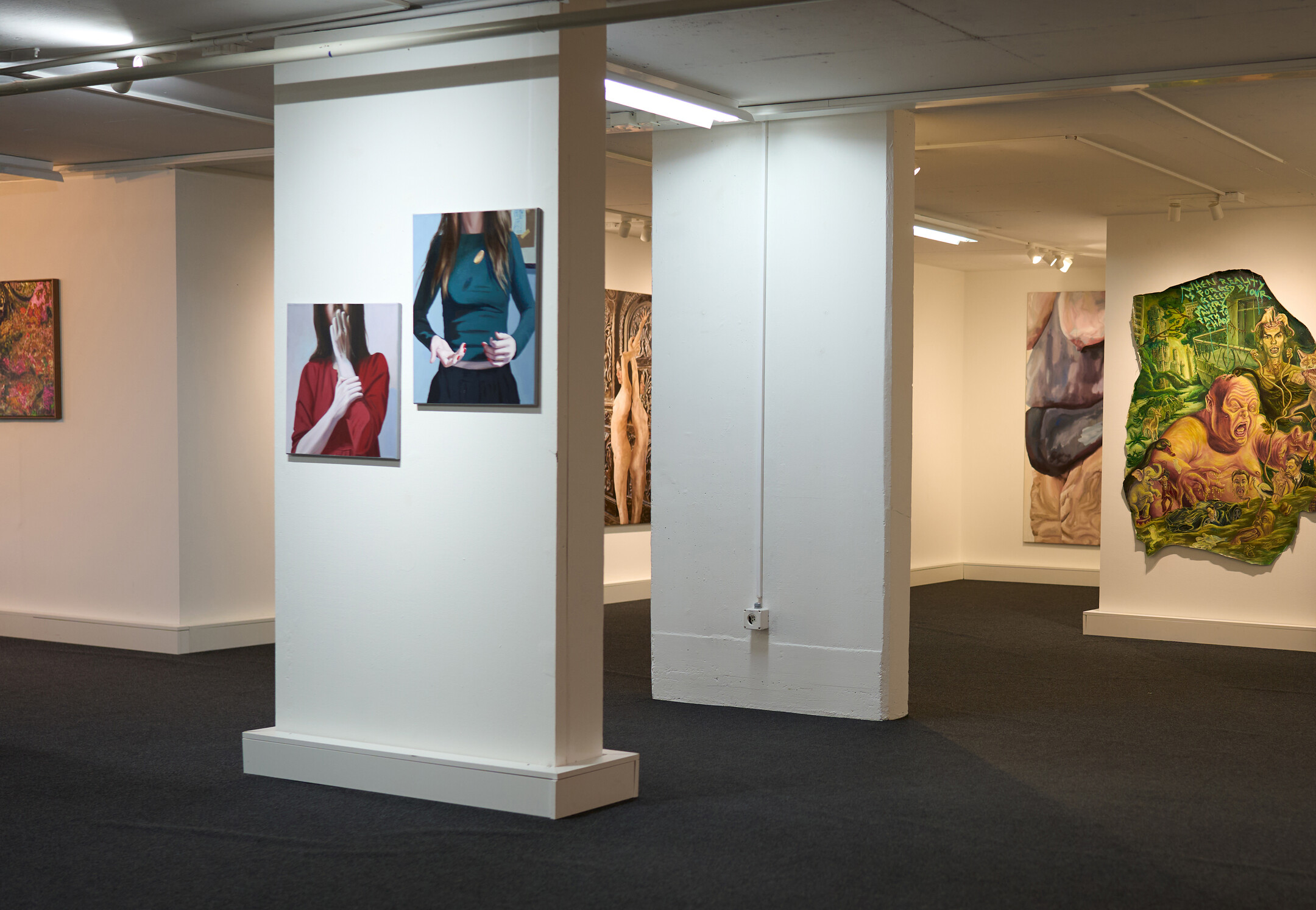
Kate Barvynska, Doubts, Choice, Oil on canvas, 60x50 cm (each), 2026
Alexej Sachov’s photographs introduced an environment in which familiar rules of perception no longer apply. Created underwater, works including The Prehistoric Art of Nature and The Jewel of Nature revealed corals and organic structures through shifting light, altered colour and unstable scale. The artist had to enter the conditions he was recording, rather than observe them from a safe distance. Their visual precision and impact were later noted in the jury’s written assessment.
Pavol Zelina used painting to investigate another negotiation between intention and uncertainty. A neuroscientist turned artist, Zelina builds his abstract compositions through layers of oil, acrylic, pastel and spray paint. In Geometry of Mind’s Intent #2 and inFinite Mirror #3, controlled forms coexist with raw textures, irregular surfaces and marks created through partially random processes.
Zelina deliberately limits his authority over the final composition. Colour and gesture are allowed to interact in ways that cannot be fully predicted. Painting becomes a record of the mind attempting to construct meaning while moving between control and accident.
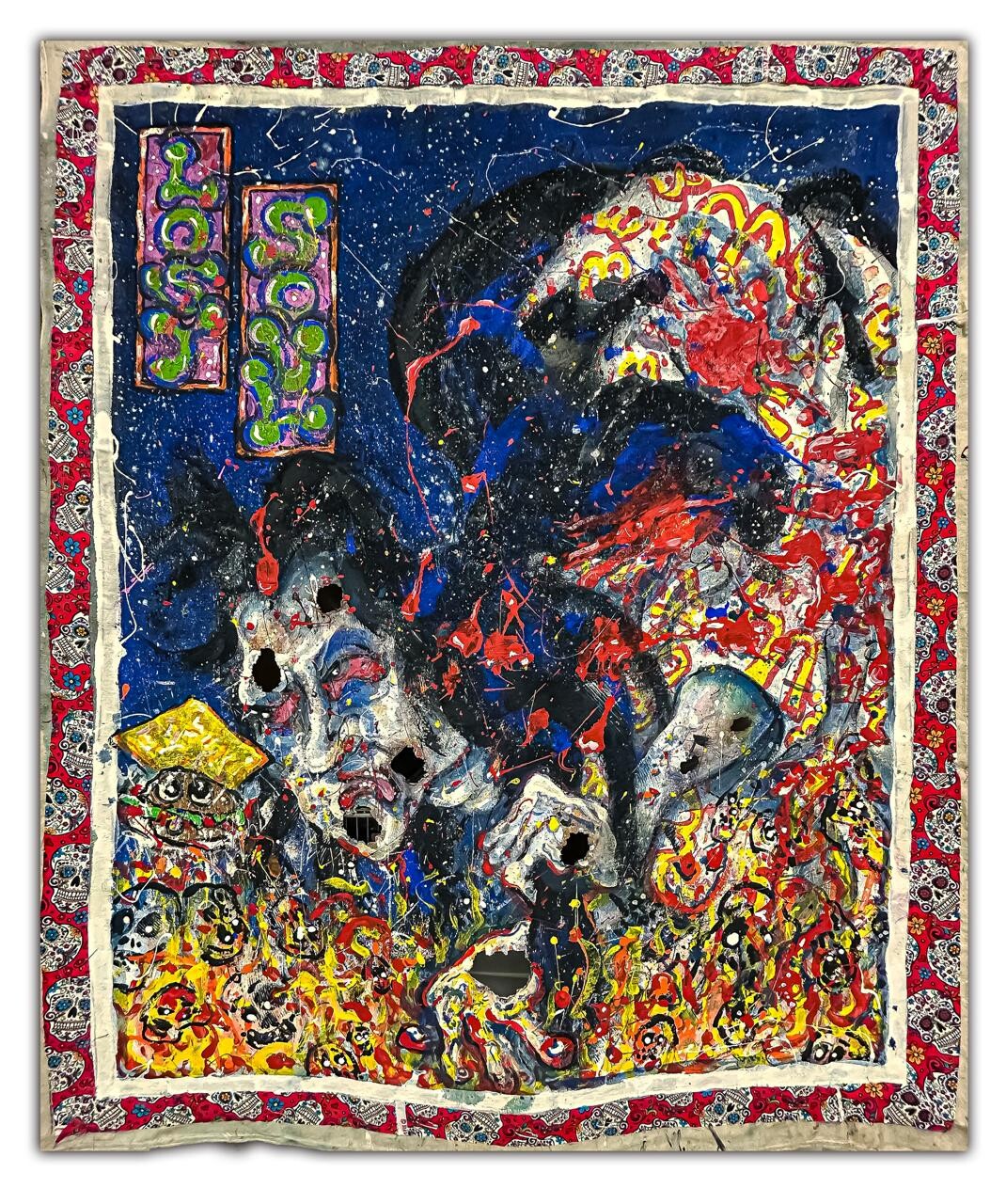
Michael Schuetz, The Lost Soul of Human Hamburger, Acrylic and ink on canvas dropcloth 150x100 cm, 2025
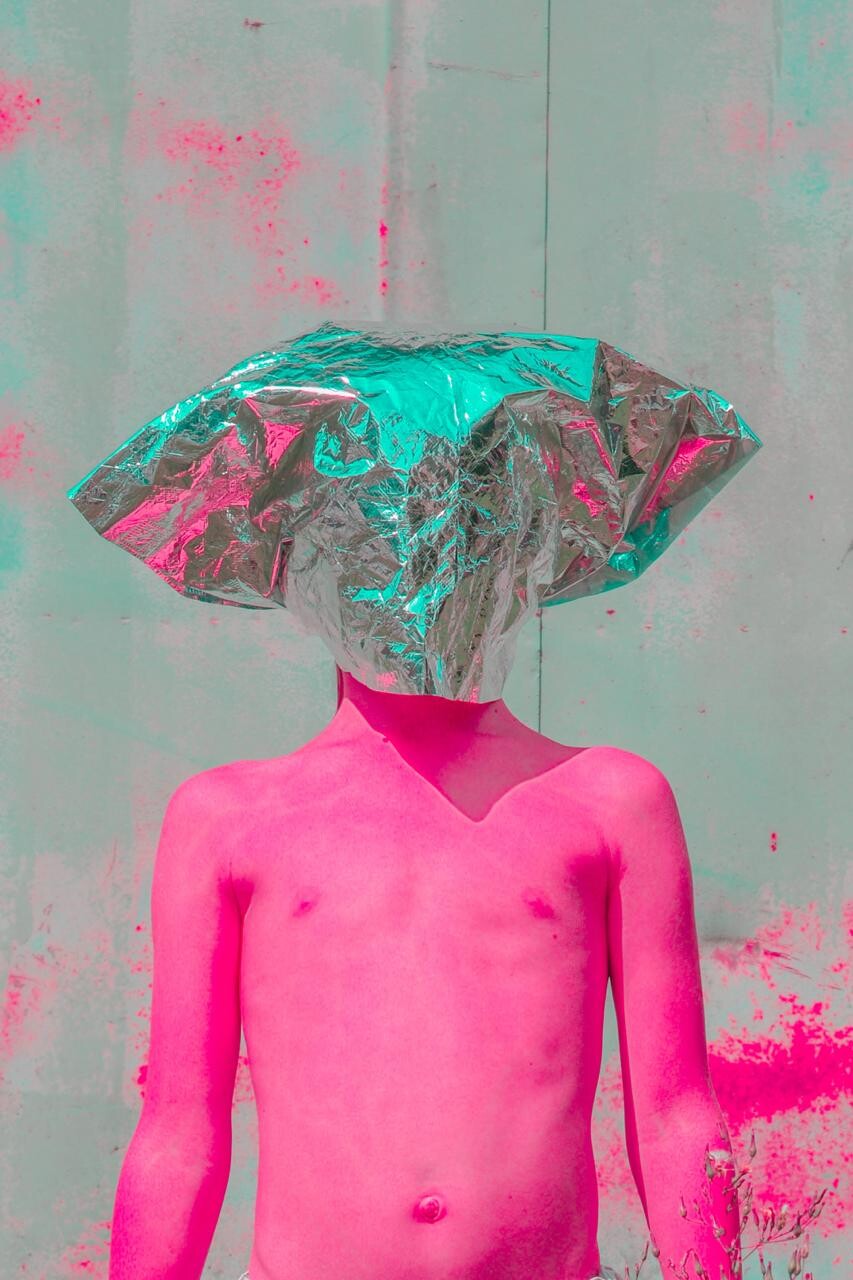
Jasper Smit approached survival through growth, propagation and botanical transformation. Born in South Africa and based in Switzerland, he came to collage through horticulture and landscape architecture. His mixed-media works, including Die Seisoenlike Seekat Bloemis, Die Straaling van Moedernatuur and Tinus die Florerende Skepper, imagine botanical beings in which plant, body and invented organism begin to merge.
These figures suggest survival as a living process of adaptation. They grow through combination, repetition and the circulation of forms. Rather than treating nature as a stable background for human experience, Smit presents it as an active creative system with its own capacity for reinvention.
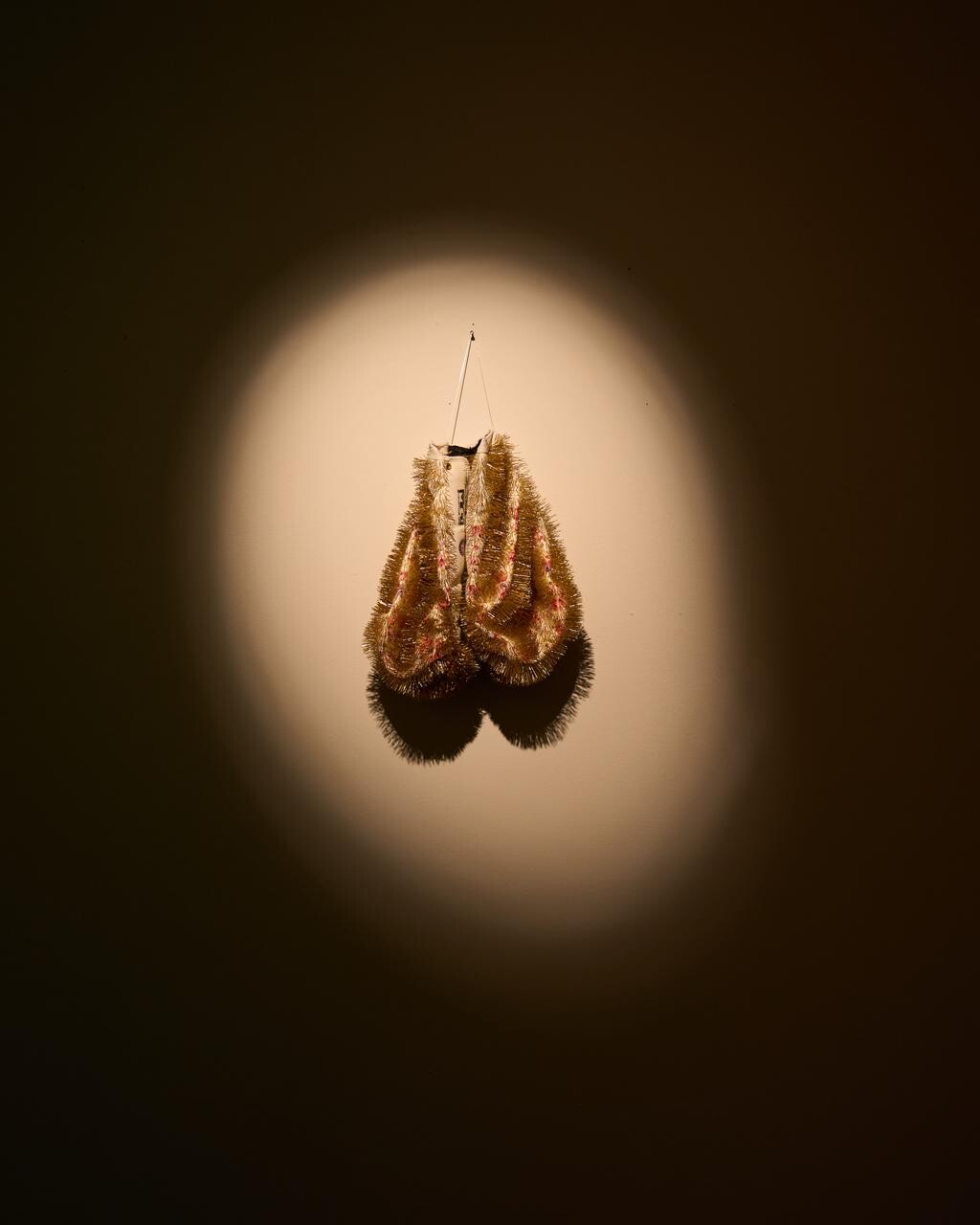
Myriam de Wurstemberger, Are You Pussy Enough, Gloves from series Safe Space, 2023
Olga Ottenheijm Selyshcheva explored the instability hidden within seemingly familiar forms. Works such as The End of Civilization as You Know It, its accompanying art book, and The Still Life with a Secret brought together domestic references, dark humour and the possibility of collapse.
The titles alone create a tension between the everyday and the catastrophic. Civilization does not end through a distant cinematic spectacle. Its disappearance is introduced through an intimate object, a still life or a book that can be held in the hands. The ordinary becomes slightly unreliable, as though it were concealing evidence of a larger transformation.
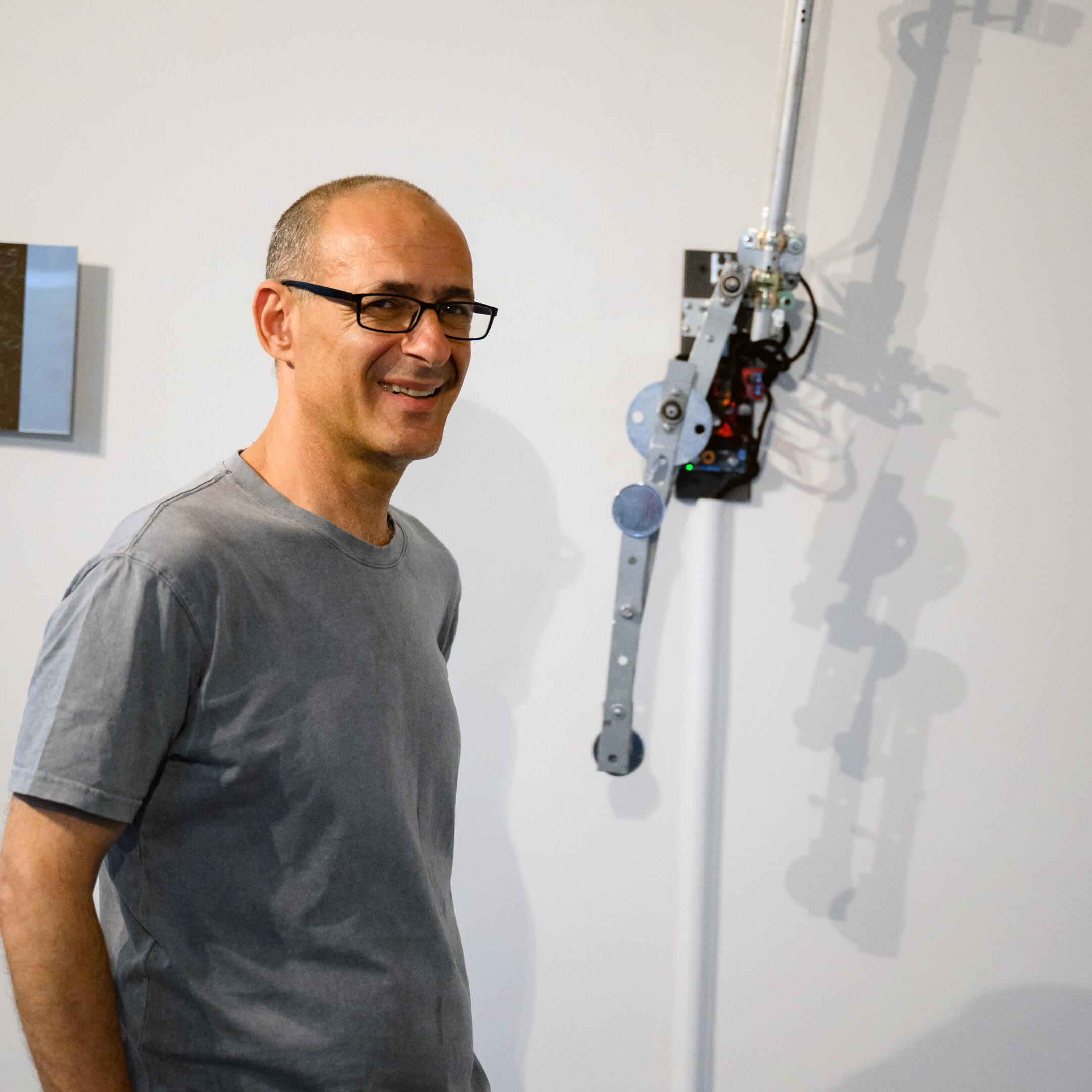
Shaul Tzemach, The Law of the unforeseen, 2025, Metal and Electronic System, 20x55x15 cm
Michael Schuetz introduced humour and grotesque exaggeration into the exhibition through the large paintings The Lost Soul of Human Hamburger and BIG N’ MORE: I’ll Meat You in the Sky. Made with acrylic and ink on canvas drop cloth, the works retained a provisional, physically direct quality.
Their language of appetite, consumption and absurdity allowed serious questions to emerge without solemnity. Schuetz’s titles twist familiar expressions into something comic and unsettling, suggesting a world in which human identity has become entangled with products, excess and the endless performance of desire.
Noah Di Bettschen’s contribution was impossible to overlook physically. Pure Gold, measuring 200 by 370 centimetres, and Greed Paves a Path to Misery, measuring 175 by 155 centimetres, confronted the viewer at the scale of bodies rather than conventional pictures. Di Bettschen works primarily with large-format figurative painting and poetry. Writing and painting developed for him as connected ways of processing childhood trauma, depression and the loss of his father to addiction. His wider practice has included portraits and documentaries focused on people living with addiction and homelessness in Zurich and Los Angeles. Rather than transforming those lives into anonymous social symbols, he attempts to preserve the individuality of people society often prefers not to see. (Noah Di Bettschen’s official website)In the Basel exhibition, the monumentality of his canvases was not simply a question of spectacle. Scale became a demand for attention. Figures and emotions that could otherwise be ignored occupied enough physical space to make avoidance difficult. Together, these projects revealed how differently the exhibition’s central question could be answered. Survival appeared as multispecies care, protective isolation, sustained attention, bodily testimony, botanical propagation, creative uncertainty, environmental immersion, dark humour and the transformation of personal trauma into a public visual language. (Noah Di Bettschen’s official website)
The strength of the exhibition came from allowing these approaches to coexist without forcing them into a hierarchy.
Why the organisers created a competition
During Basel Art Week, attention is distributed across a vast network of fairs, galleries, museums, foundations, independent initiatives and temporary projects. The scale creates extraordinary opportunities, but it also presents a problem. Individual artists can easily disappear behind the names of galleries, institutions and large curatorial programmes.
The organisers of SURVIVAL RITUALS wanted to address this imbalance. Alongside the exhibition and its public programme, they established the Best Artist of the SURVIVAL RITUALS Exhibition competition.
The purpose of the competition was not simply to add another award to the Basel calendar. It was intended to create an additional structure of professional attention around the participating artists. Each project would be considered individually, discussed by specialists and evaluated through a shared set of criteria. This was especially relevant for an independent international exhibition. Unlike the central fair, where visibility is generally mediated through gallery representation, SURVIVAL RITUALS focused attention directly on artistic practices. The competition gave the jury a reason to study every project closely and created a formal record of that professional assessment.
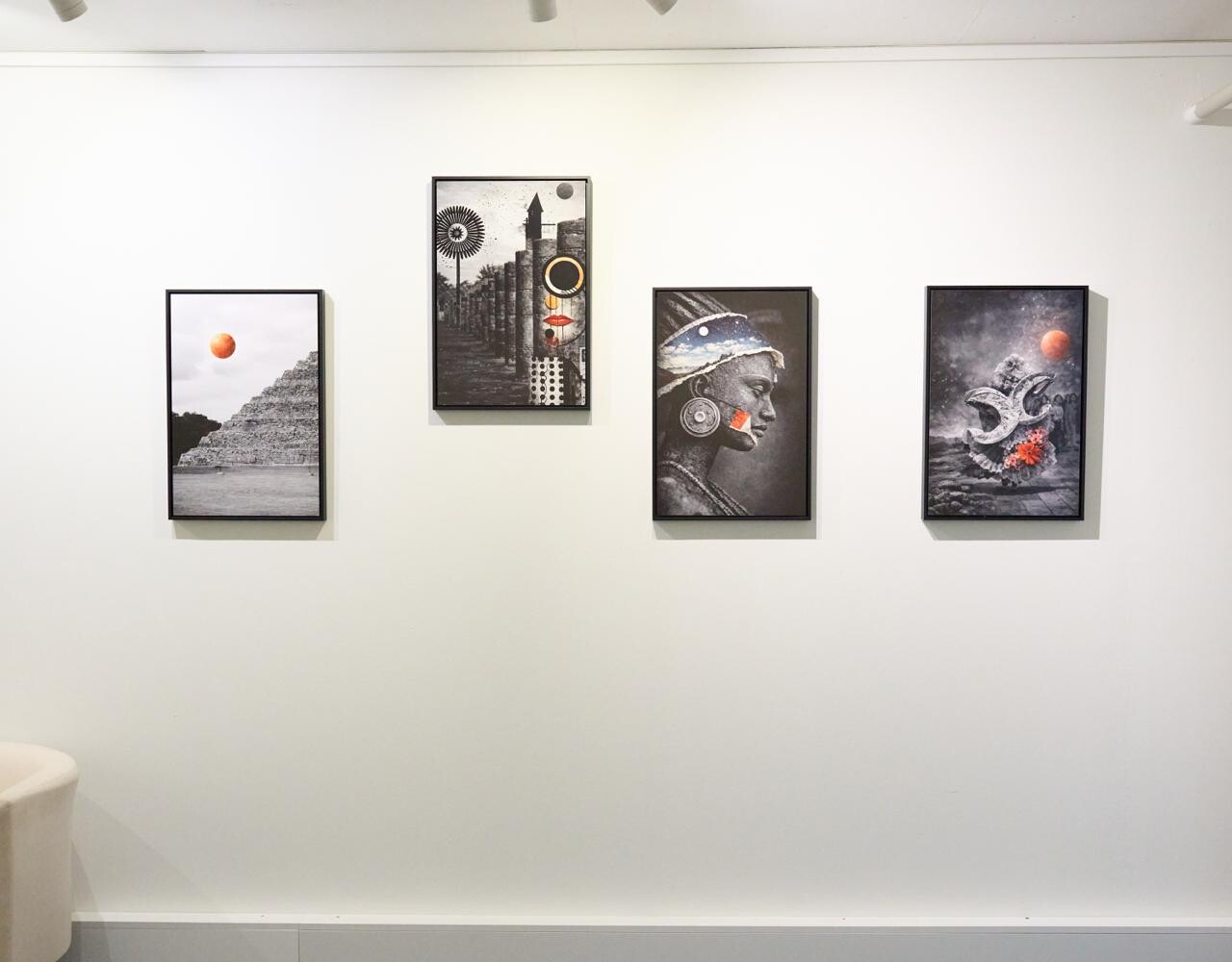
Tetiana Popyk, Mask of Memory from the series Mexico Fragments, Archival pigments print on Hahnemuhle Photo Rag Baryta, 58x40 cm (each), 2025
The organisers selected a multidisciplinary international jury whose members represented curatorial work, photography, visual art, cultural management, cinema, writing and education.
hotographer Kateryna Tytarenko brought experience of working with bodies under pressure, discipline and extreme concentration through her documentation of international rhythmic gymnastics. Photographer and educator Mykola Novikov contributed knowledge of portraiture, sports photography, exhibition practice and the professional development of photographers. Visual artist and curator Eugenia Brodsky contributed more than two decades of experience across photography, film and new media, as well as an authorial approach to exhibition-making developed through her Curator as Author methodology. Curator Mariia Manuilenko, co-founder of Rukh Art Hub and Art Territory, brought experience of producing exhibitions across the United States and Europe and working between different cultural environments. Documentary photographer Ihor Timankov contributed expertise in narrative photography, visual research and the cultural responsibility of image-making. Multidisciplinary artist Myroslav Duzinkevych brought a perspective shaped by painting, scenography, immersive installations and work within large-scale film productions. Painter Kateryna Reznichenko contributed a practising artist’s understanding of embodiment, transformation and the relationship between an idea and its material realisation. Screenwriter, playwright and media educator Oleksandr Gorbatyi expanded the jury’s perspective through his knowledge of dramaturgy, narrative construction and cultural communication. Birth photographer and mentor Yana Liashenko brought extensive experience of documenting vulnerability, transition, intimacy and family memory.
This range of professional backgrounds allowed the projects to be considered from several perspectives. The jury looked not only at visual impact or technical execution, but also at the strength of each artistic idea, its relationship to the exhibition, its contemporary relevance and its potential to develop internationally.
The participating projects were assessed according to six criteria: relevance to the exhibition concept, artistic quality, originality, conceptual integrity, contemporary relevance and international potential. Jury members evaluated the works independently, after which their assessments were brought together in a collective result.
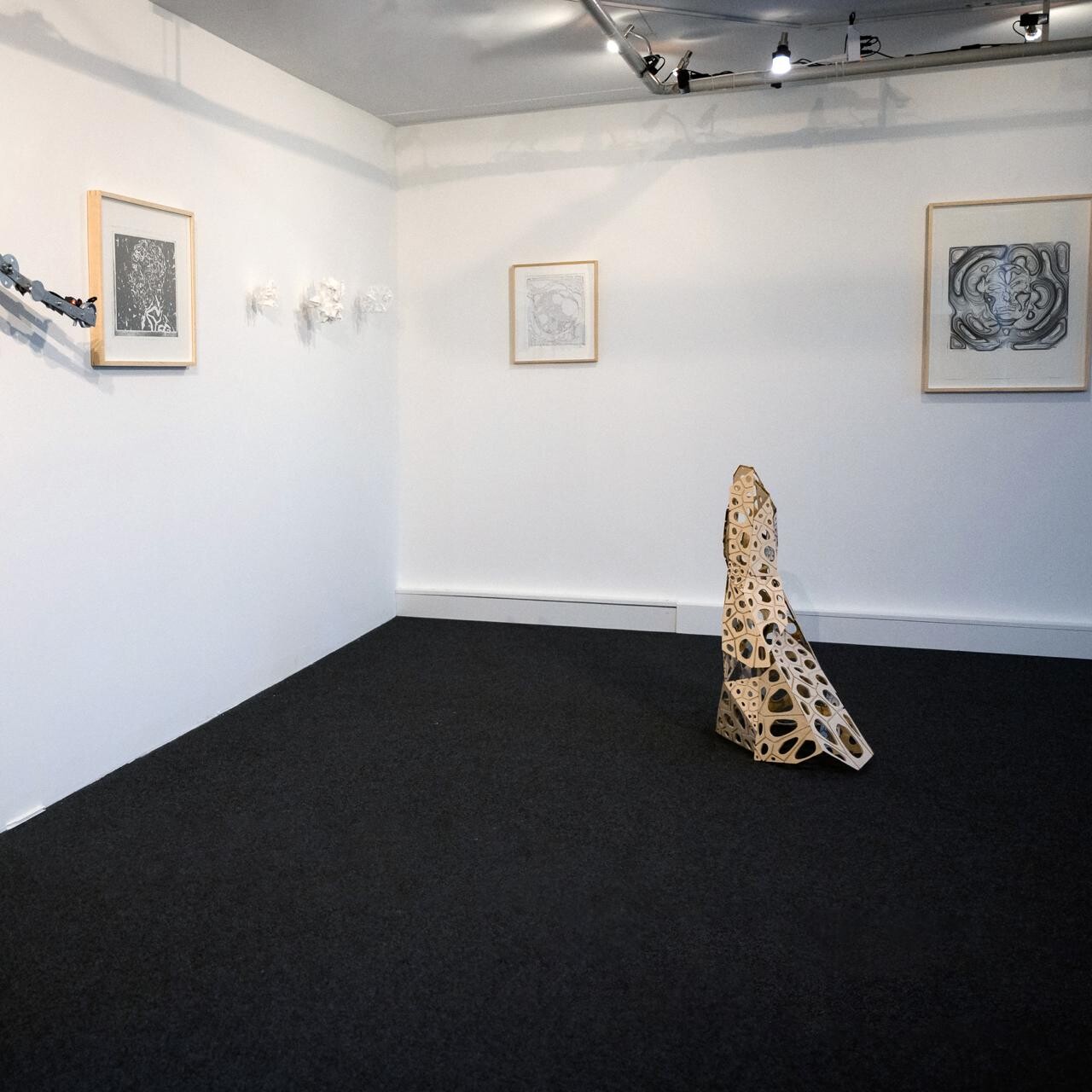
Shaul Tzemach
The jury’s decision
The jury selected Shaul Tzemach as the recipient of the Best Artist Award. His project received 53.4 points out of 60, and the decision was formally recorded on 2 July 2026.
The jury recognised the coherence with which Tzemach connected generative algorithms, kinetic mechanisms and physical materials. His works approached instability as a continuous process in which structures break down, adapt and re-form.
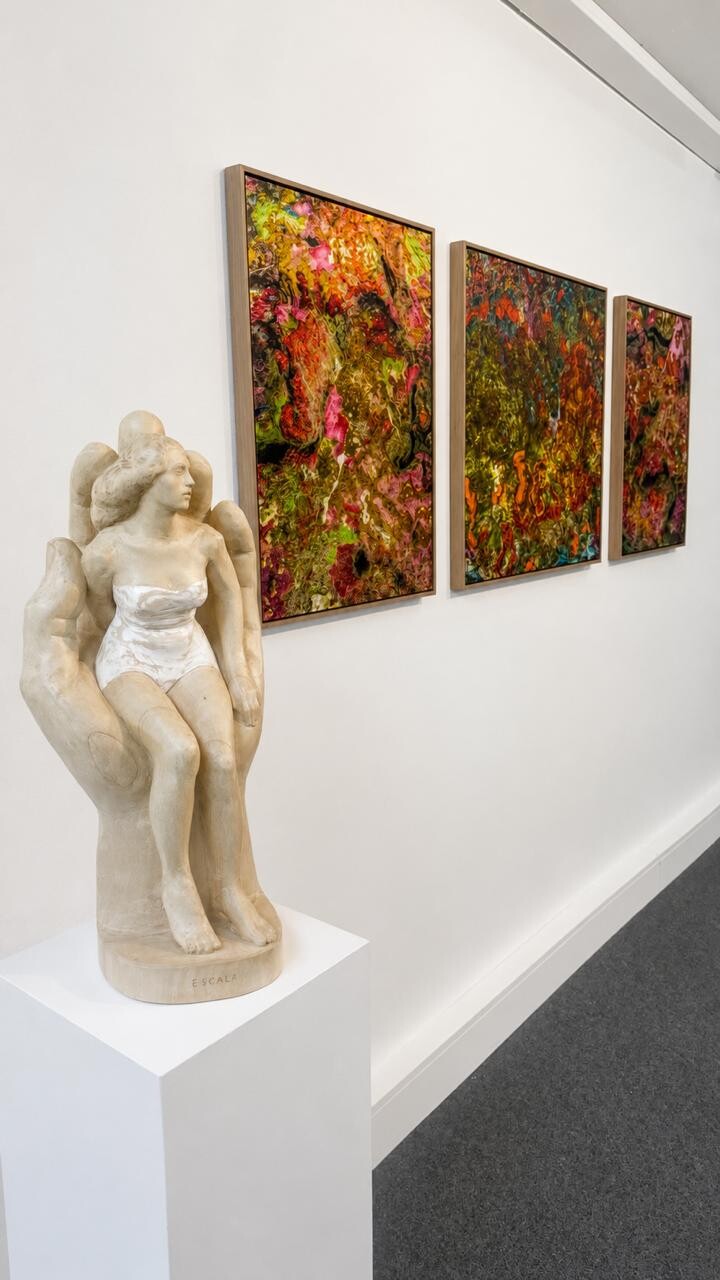
Laser-engraved stainless steel, CNC-cut wood, printmaking, paper and mechanical movement were brought together in a visual language that positioned computation as a creative participant rather than simply a production tool. The project addressed the exhibition’s central themes through questions of entropy, reconstruction, technological dependence and the persistence of order under pressure. The decision also took into account the project’s conceptual maturity, technical execution and capacity to continue developing in an international institutional context. Tzemach’s previous presentations at the Museum of Arts and Design in New York, Ars Electronica in Linz and the Erarta Museum supported the jury’s assessment of his international potential.
As the recipient of the award, Tzemach will receive a year-long professional collaboration with Rukh Art Hub, an exhibition in New York and a contract with TUASHO Agency. The prize therefore extends beyond formal recognition. It provides a practical structure for the continued development, presentation and international positioning of his work.
The competition produced a winner, but it did not reduce the exhibition to one successful position. Its wider purpose was to draw sustained professional attention to individual practices that might otherwise have been lost within the density of Basel Art Week. The diversity of the exhibition remained essential to its argument. These artistic languages could not, and did not need to, be reduced to a single model of survival or artistic success.
Tamborriello
Where the project sits in the Basel ecology
Art Basel’s 2026 edition ran from 18 to 21 June, bringing more than 200 galleries and over 4,000 artists to the city. Around it, Basel’s wider art ecosystem included museums, foundations, public projects and satellite fairs such as Liste, Volta and Photo Basel.
SURVIVAL RITUALS belonged to this expanded landscape, but its organisational structure differed from a conventional satellite presentation. Basel Art Center provided the institutional setting and co-produced the exhibition. TUASHO Agency developed the curatorial concept, selected the artistic positions and shaped the public programme. Rukh Art Hub contributed its international network and experience of supporting artists across cultural and geographic borders.
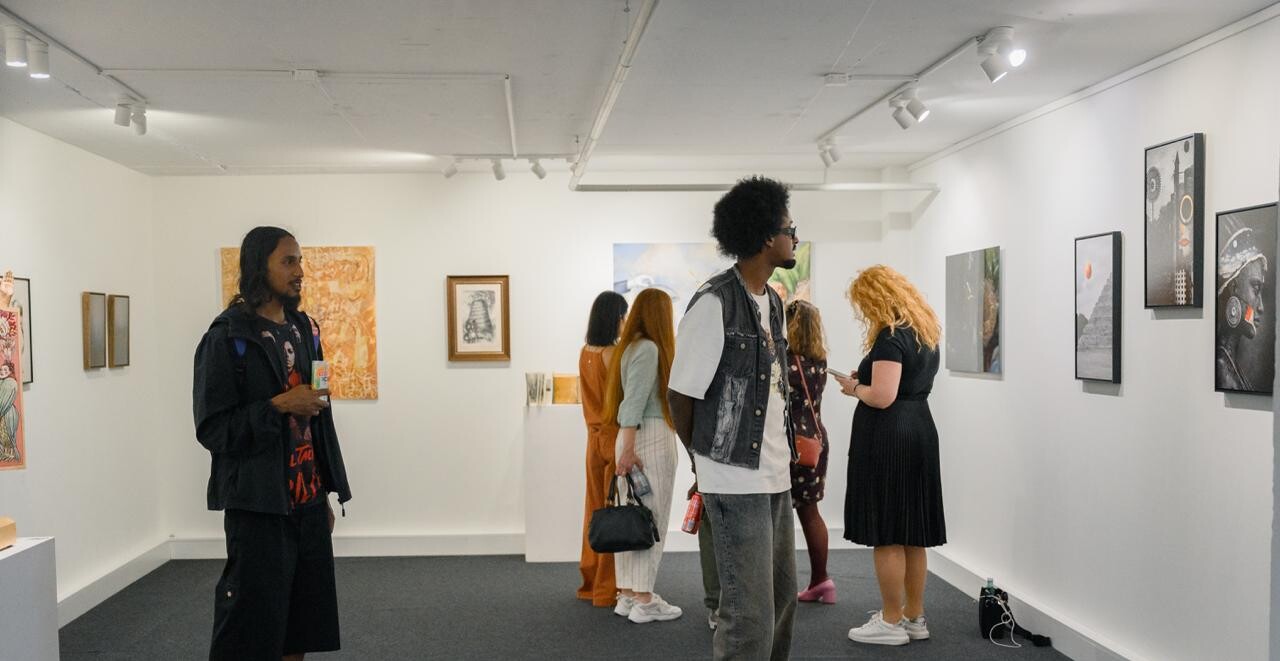
Survival Rituals guests
Basel Art Center’s director described the exhibition as the first project in five years in which the centre acted as an originator rather than solely as a host. This made the production model itself significant. The project was built through shared responsibility between an institution, a curatorial agency and an international art platform. Throughout the week, the exhibition expanded through screenings, performances, artist talks, an Opening Brunch, the presentation of Survival Books, an international Press Day, and an Art Dinner and Open Microphone organised with Unframed Stories. These events treated conversation, hospitality and physical presence as part of the exhibition rather than as additions to it. If survival was understood as a collective practice, then the project also needed to create spaces in which people could meet, listen and respond to one another.Whether this model can continue beyond a single edition is a more interesting question than whether the exhibition can be described simply as a success. A project that treats survival as infrastructure, rather than as subject matter, ultimately proves its argument through the relationships and opportunities that remain after the exhibition closes.
SURVIVAL RITUALS did not suggest that art could resolve war, displacement, ecological disruption or technological anxiety. Its proposition was more modest and perhaps more durable. Art can give form to uncertainty without simplifying it. It can preserve attention, create professional visibility and maintain connections between people who are living through different versions of the same unstable present. The threshold remains open. The old world has not returned, and the new one has not fully arrived. What the exhibition offered was not an exit, but a collection of practices for remaining human while standing in between.